Martial Deities 武神

Chinese War Gods & Warrior Deities

Fierce Protectors of Heaven and Earth

Chinese mythology never crowned a single god of war. Instead it built an entire military hierarchy — marshals, generals, gate guardians, and canonized mortals — each answerable to the Heavenly Court and each remembered for a different kind of courage.

Warriors of the Chinese Pantheon

Where Greek myth gave war a single owner in Ares and Rome gave it Mars, Chinese mythology distributed martial power across dozens of figures. The reason is cultural: Chinese religion imagined heaven as a bureaucracy rather than a family of quarrelling gods. Heaven needed a Ministry of War, and a ministry needs marshals, vanguard commanders, banner bearers, and gate guardians. Divine violence became a matter of rank and duty, not personality.

That structure produced a distinctive idea of the war god. A Chinese martial deity is almost never celebrated for loving battle. He is celebrated for justified battle — for putting down a rebellion, draining a flood, executing a corrupt official, or refusing a bribe. Guan Yu is worshipped less for the armies he beat than for the loyalty he never broke. Nezha is remembered for defying a tyrannical dragon king even at the cost of his own life. Martial virtue (武德) mattered more than the body count.

Because of that moral framing, war gods became the most approachable deities in Chinese folk religion. Farmers asked them to drive away plague, merchants asked them to guarantee honest contracts, and examination candidates asked them for the nerve to face a hard test. A spear in Chinese mythology points outward, at chaos — it is defensive equipment for a fragile world, and that is why these fierce figures ended up on the front door of ordinary homes.

The Role of War Gods in Chinese Mythology

The Heavenly Court runs on the same logic as an imperial court. The Jade Emperor governs, civil deities handle records, rain, and harvests, and the martial deities enforce. When a demon king seizes a mountain pass or a river spirit floods a province, heaven does not negotiate — it dispatches a marshal with a celestial army. Erlang Shen leads such expeditions; Nezha rides as vanguard; the Four Heavenly Kings hold the cardinal directions.

War gods also served the empire directly. Emperors granted titles to martial deities the way they promoted living officers, and each promotion made the god a partner in legitimising the dynasty. Guan Yu rose from duke to king to emperor-level deity across the Song, Ming, and Qing courts. Temples doubled as garrison shrines, generals swore oaths before campaigns, and a victory could be credited to divine reinforcement. The god of war was, in effect, part of the state.

At street level the same figures took on protective duties that had nothing to do with armies. Their portraits were pasted on gates as door gods (门神) to stop wandering spirits from entering. Butchers, blacksmiths, martial artists, police, and secret societies all adopted martial patrons. In Chinese practice, worship of a war god is usually a request for boundaries — a line drawn between an ordered household and whatever is outside it.

Featured War Gods & Warriors

9 martial figures from our collection — tap any card for a 30-second guide to their story, powers, and cultural legacy.

Bai Suzhen (白素贞) - Chinese war god illustration

Bai Suzhen

白素贞

The White Snake Lady

A white snake spirit who cultivated for a thousand years to attain human form. She fell deeply in love with the mortal scholar Xu Xian at West Lake, married him, and used her healing powers to help the poor. When the monk Fahai exposed her true nature and imprisoned her beneath Thunder Peak Pagoda (雷峰塔), her unwavering love became one of China's Four Great Folktales (四大民间传说).

Centuries of spiritual cultivationWeather manipulationHealing arts and herbal medicine
White Snake Sword (白蛇剑)
Erlang Shen (二郎神) - Chinese war god illustration

Erlang Shen

二郎神

The Third-Eye Warrior God

Erlang Shen is one of the most powerful warrior deities in Chinese mythology, famous for his third true-seeing eye and his loyal celestial hound Xiaotian. He is the nephew of the Jade Emperor and achieved godhood through his own merit rather than birthright. His legendary battle with Sun Wukong during the Monkey King's rebellion against Heaven is one of the most celebrated confrontations in Chinese mythology.

Third True-Seeing Eye72 TransformationsSupreme Combat Mastery
Three-Pointed Double-Edged Spear (三尖两刃刀)Celestial Hound Xiaotian (哮天犬)
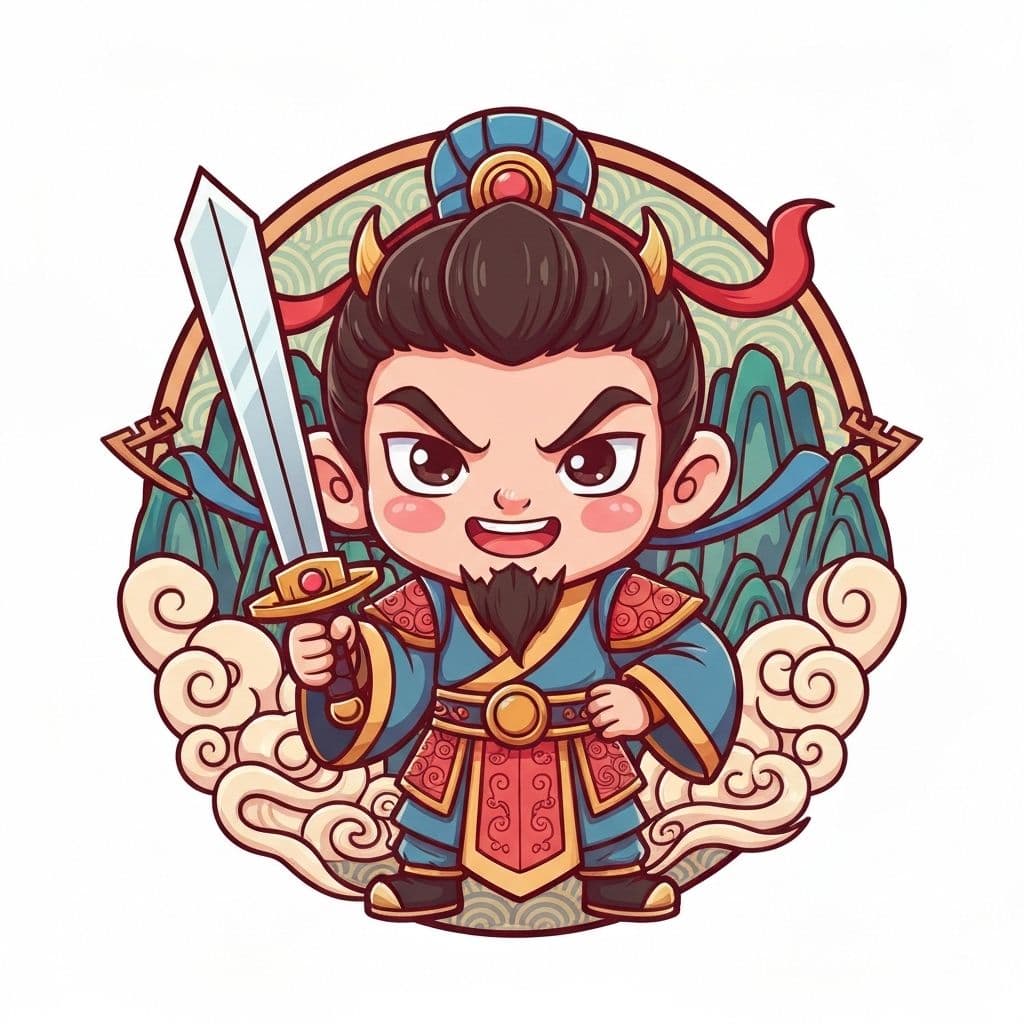
Guan Yu (Lord Guan) (关羽) - Chinese war god illustration

Guan Yu (Lord Guan)

关羽

The Saint of War

Guan Yu is the Three Kingdoms general deified after death as Lord Guan — the Saint of War revered simultaneously by Confucians, Taoists and Buddhists, worshipped by police officers and triad gangs alike. With his long beard, red face, Green Dragon Crescent Blade and the horse Red Hare, he is the supreme embodiment of loyalty and righteousness in Chinese culture. Over 1,800 years he rose from marquis to king to emperor to god, with more than 30,000 temples dedicated to him worldwide.

Green Dragon Crescent Blade MasterySlaying Generals Amidst Ten Thousand ArmiesMight that Shook the Realm (威震华夏)
Green Dragon Crescent Blade (青龙偃月刀)Red Hare (赤兔马)
Hou Yi (后羿) - Chinese war god illustration

Hou Yi

后羿

The Archer Hero

A master archer who saved the world by shooting down nine of the ten scorching suns. He is the husband of Chang'e and a symbol of courage, strength, and tragic heroism in Chinese mythology.

Archery masterySuperhuman strengthSolar immunity
Divine bow (神弓)Red-cord arrows (赤羽箭)
Hua Mulan (花木兰) - Chinese war god illustration

Hua Mulan

花木兰

The Warrior Maiden

Hua Mulan is the heroine of the ancient Ballad of Mulan who disguised herself as a man to take her elderly father's place in the army, fighting for twelve years without her comrades ever discovering her secret. Returning home a decorated warrior, she refused all official titles and simply resumed her life as a daughter. She is the most globally recognized Chinese heroine — a dual symbol of filial devotion and female strength whose story has been told for 1,500 years and reached worldwide fame through Disney.

Master SwordsmanshipMounted ArcheryMilitary Command
Jian Sword (剑)War Horse (战马)
Nezha (哪吒) - Chinese war god illustration

Nezha

哪吒

The Young Marshal

A rebellious child-god born from lotus root who defied unjust authority, sacrificed himself to save his family, and was reborn to become a powerful protector deity.

Wind Fire WheelsUniversal Ring (乾坤圈)Red Armillary Sash (混天绫)
Wind Fire WheelsUniversal Ring
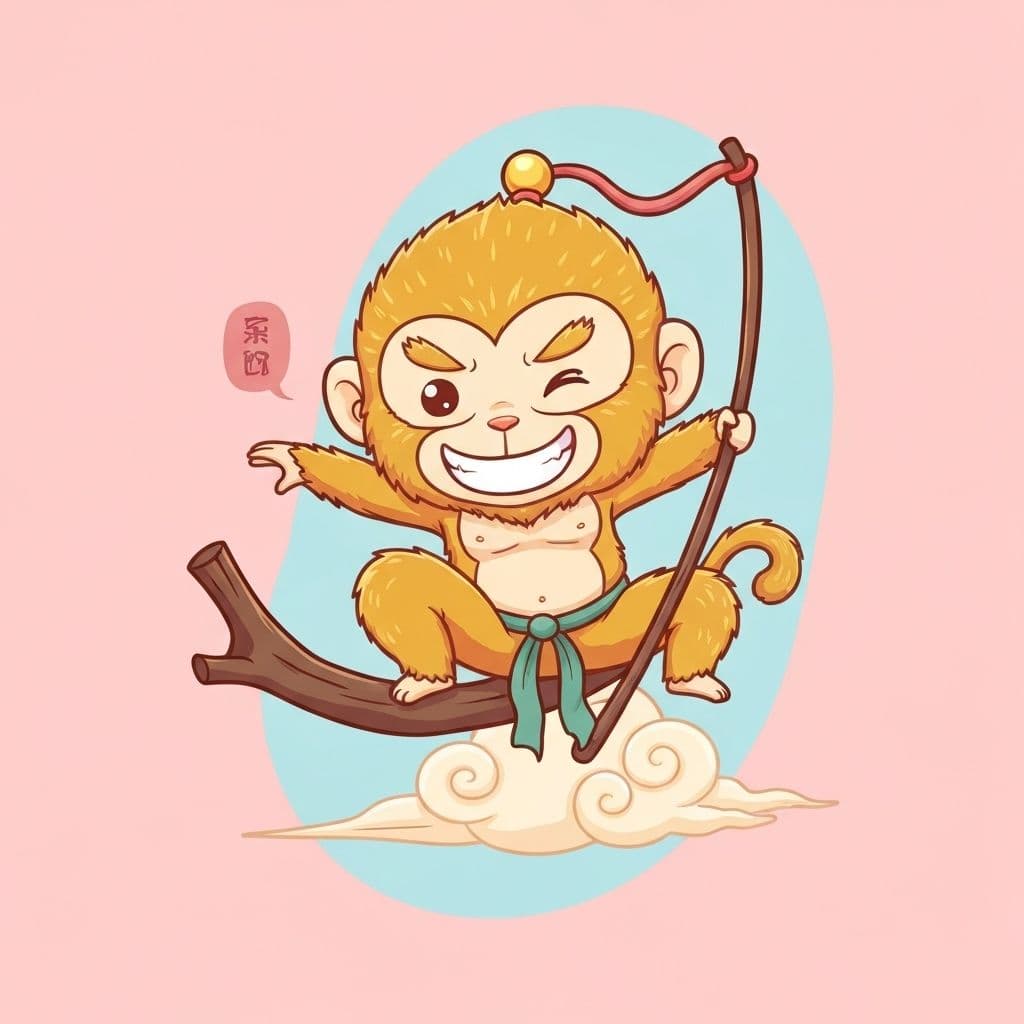
Sun Wukong (孙悟空) - Chinese war god illustration

Sun Wukong

孙悟空

The Monkey King

Born from a magical stone, Sun Wukong is the ultimate trickster hero who challenged heaven itself and became the protector of the monk Xuanzang on the journey to retrieve Buddhist scriptures.

72 TransformationsCloud Somersault (筋斗云)Immortality
Ruyi Jingu Bang (如意金箍棒)Magic Staff
Zhong Kui (钟馗) - Chinese war god illustration

Zhong Kui

钟馗

The Demon Queller

A brilliant scholar who became the ultimate demon hunter after his tragic death. Zhong Kui protects the innocent from evil spirits and maintains the balance between the mortal and spirit worlds.

Demon DetectionExorcismMartial Arts Mastery
Demon-Slaying Sword (斩妖剑)Scholarly Brush
Zhu Bajie (猪八戒) - Chinese war god illustration

Zhu Bajie

猪八戒

The Heavenly Marshal Reborn

Zhu Bajie, also known as Pigsy, was once the mighty Marshal Tianpeng who commanded 80,000 celestial naval forces in Heaven. After drunkenly flirting with the Moon Goddess Chang'e, he was banished to Earth but accidentally reincarnated into a pig demon's body. Despite his lazy, gluttonous, and lustful nature, he becomes an indispensable member of Xuanzang's pilgrimage team, providing comic relief while hiding surprising combat prowess beneath his buffoonish exterior.

36 Heavenly TransformationsCloud RidingNine-Tooth Rake Mastery
Nine-Tooth Iron Rake (九齿钉耙)

Most Powerful Chinese War Gods

Guan Yu 关羽

The Martial Saint · God of War and Loyalty

Guan Yu is the closest thing Chinese religion has to an official god of war. A real general who served the warlord Liu Bei in the collapse of the Han dynasty, he was killed in 220 CE after a failed campaign at Fancheng — and then began a second career that lasted eighteen centuries. Buddhists made him a temple guardian, Taoists made him a marshal, Confucians made him the Martial Saint standing beside Confucius, and the Qing court raised him to the rank of emperor.

What sealed his divinity was not victory but character. He crossed five passes and cut down six generals to return his sworn brother's family, refusing the gold and titles his captor offered. That reputation for unbuyable loyalty made him the patron of anyone whose work depends on trust — merchants sealing deals, police swearing oaths, restaurants and shops keeping a red-faced statue by the till. His weapon, the Green Dragon Crescent Blade, is one of the most recognisable objects in Chinese art.

Read the full Guan Yu guide →

Nezha 哪吒

Third Lotus Prince · Marshal of the Central Altar

Nezha is heaven's vanguard and its most volatile soldier — a child general who fights on Wind Fire Wheels with a Fire-Tipped Spear and a Universe Ring. Born from a three-year pregnancy as a ball of flesh, he killed the Dragon King's son Ao Bing in a river brawl, then took his own life on the palace steps rather than let his family be punished for it. His master rebuilt him from lotus root, which is why he is the god who literally could not be destroyed by shame.

In the Investiture of the Gods he serves as the Zhou army's spearhead against the Shang, and in Journey to the West he is one of the few celestial officers who can trade blows with Sun Wukong. Modern China reads him as an icon of youthful rebellion against unjust authority — a reading that turned the 2019 animated film Ne Zha into one of the highest-grossing Chinese movies ever made.

Read the full Nezha guide →

Erlang Shen 二郎神

Three-Eyed Warrior God · Commander of Celestial Campaigns

Erlang Shen is the general heaven sends when a job is too big for anyone else. His third eye pierces illusion, which makes him the perfect hunter of shapeshifters — and the only officer to actually corner Sun Wukong during the Monkey King's rebellion, matching him transformation for transformation with his loyal Celestial Dog at his side. He carries a three-pointed double-edged spear and is often identified with Li Bing, the engineer who tamed the Min River.

That flood-control lineage matters: Erlang Shen fights water as often as demons, and Sichuan honours him as the deity who made a river valley habitable. He is also a nephew of the Jade Emperor who keeps a deliberate distance from the court, giving him a reputation for competence without servility — a warrior god who obeys orders he agrees with.

Read the full Erlang Shen guide →

Sun Wukong 孙悟空

Monkey King · Great Sage Equal to Heaven

No figure in Chinese mythology has fought more battles than the Monkey King. He wields the Ruyi Jingu Bang, an iron staff weighing over seven tons that shrinks to the size of a needle behind his ear, and commands seventy-two transformations plus a cloud-somersault that covers 34,000 miles in one leap. He erased his name from the ledgers of death, emptied heaven's peach garden, and held off the entire celestial army before the Buddha pinned him under a mountain for five hundred years.

Sun Wukong is a war god by results rather than appointment — a rebel whose combat record forced heaven to give him a title. His arc from insurgent to disciplined pilgrim escort is why he anchors Journey to the West, and why he remains the most adapted Chinese character in global games, anime, and film.

Read the full Sun Wukong guide →

Hou Yi & Hua Mulan 后羿 · 花木兰

The Divine Archer and the Warrior Maiden

Hou Yi earned his place among martial legends with a single act of marksmanship: when ten suns rose together and scorched the earth, he shot nine of them from the sky and left one to warm the crops. His story is the mythological argument that overwhelming force is virtuous only when it restores balance — and its aftermath, the loss of his wife Chang'e to the moon, is the price he pays for the elixir he never drank.

Hua Mulan represents the other end of the spectrum: no divine bloodline, no magic weapon, just a daughter who took her ailing father's conscription notice, disguised herself as a man, and survived twelve years of frontier war before declining an imperial post to go home. Chinese tradition ranks her with the war gods because martial virtue was never limited to deities — filial courage counted as combat power.

War Gods vs. Demon Slayers

The two roles overlap but answer to different logics. A war god fights on behalf of an institution: he holds a rank, receives orders from the Heavenly Court, leads troops, and wages open campaigns against named enemies. A demon slayer such as Zhong Kui works alone in the dark, hunting things that have no army and no diplomatic standing — plague spirits, vengeful ghosts, fox demons in a scholar's bedroom.

The difference shows in how they are used. You invoke a war god for scale and legitimacy — victory in battle, safety of a city, honesty in a contract. You invoke a demon hunter for personal exorcism: a sick child, a haunted house, the fifth day of the fifth month when bad influences crowd in. Their iconography follows suit, with marshals in full lamellar armour and exorcists in a scholar's robe with a drawn sword and a wine gourd.

Some figures hold both offices. Guan Yu subdues demons as well as rebels; Erlang Shen hunts shapeshifters under military orders. If exorcism interests you more than warfare, our demon hunters collection covers that tradition in depth.

Chinese War Gods in Popular Culture

Chinese martial deities have become one of the world's most heavily mined pools of character design. Guan Yu has appeared in every Dynasty Warriors installment for more than two decades, alongside Total War: Three Kingdoms and hundreds of mobile strategy titles; his crescent blade is now visual shorthand for “honourable general” in games that never mention China at all. Sun Wukong reaches even further, from Dragon Ball's Son Goku to League of Legends' Wukong and the 2024 blockbuster Black Myth: Wukong.

Animation drove the most recent surge. Ne Zha (2019) and Ne Zha 2 (2025) recast the lotus prince as a misunderstood outsider and broke box-office records in China, while New Gods: Nezha Reborn moved him into a cyberpunk city. Erlang Shen's third eye and celestial dog make him a recurring antagonist across films, and Hua Mulan crossed into global consciousness through Disney's 1998 animation and its 2020 live-action remake.

Worship, meanwhile, never stopped. Guandi temples remain active from Hong Kong to San Francisco, Taiwanese police departments keep shrines to him in their stations, and door-god prints still go up at Lunar New Year. The war gods of Chinese mythology are unusual among ancient deities in that their fan base and their congregation are the same people.

Frequently Asked Questions

Who is the Chinese god of war?

Chinese mythology has no single god of war. Guan Yu (关羽) is the most widely worshipped — canonized as Guandi, the Martial Saint, and honoured in thousands of temples across Asia. Before him, the ancient war god was Chiyou, and in Taoist tradition Xuantian Shangdi and the Marshal Nezha both command heavenly armies. Which figure is called "the god of war" depends on the dynasty, region, and religious tradition you look at.

Is Guan Yu a real person?

Yes. Guan Yu was a historical general of the late Han dynasty who died in 220 CE, and his campaigns are recorded in the Records of the Three Kingdoms. Over the following fifteen centuries, storytellers, the novel Romance of the Three Kingdoms, and successive imperial courts elevated him from a mortal commander into a full deity — one of the rare cases where a documented human being became a god of war worshipped by emperors, merchants, and soldiers alike.

What weapons do Chinese war gods use?

Each war god is identified by a signature weapon. Guan Yu wields the Green Dragon Crescent Blade, a long-handled guandao named after him. Nezha fights with the Fire-Tipped Spear and the Universe Ring, aided by the Red Armillary Sash and Wind Fire Wheels. Erlang Shen carries the Three-Pointed Double-Edged Spear. Hou Yi is remembered for his divine bow, and Sun Wukong for the Ruyi Jingu Bang, an iron staff that changes size at will.

Explore More Topics